Cleaning Up Joint Use: Building Trust in Data at CMP
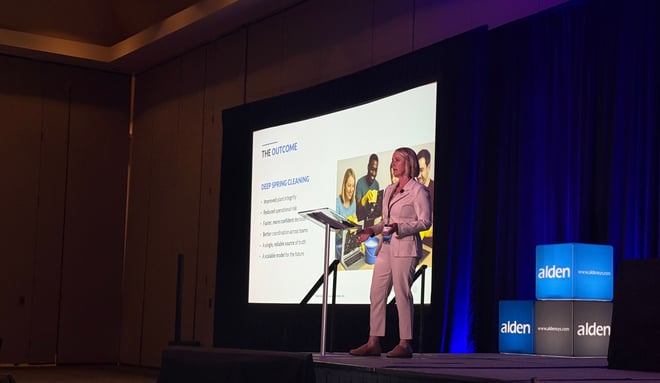
This month, we highlight “Cleaning Up Joint Use,” a 2026 Alden Conference session presented by Debbie Brill of Central Maine Power.
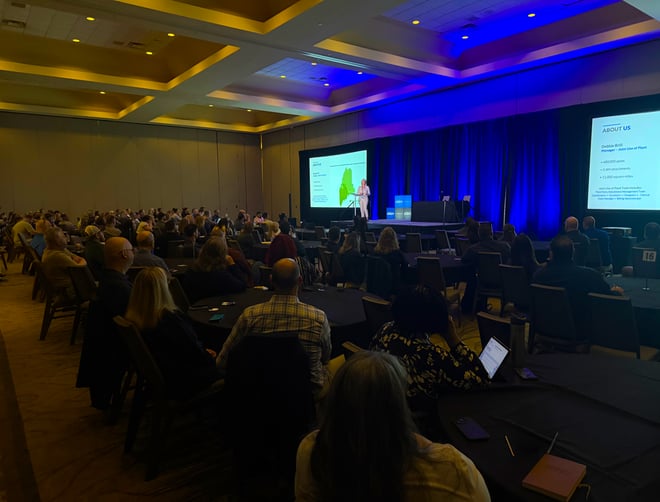
Central Maine Power’s joint use team manages a large and complex operating environment: approximately 680,000 poles, 2.4 million attachments, and 11,000 square miles of service territory. At that scale, data quality is not a back-office concern. It affects billing, field operations, emergency response, regulatory confidence, and the ability to make timely decisions across the organization.
CMP’s challenge was one many utilities understand. Attachment records and pole data were spread across multiple systems. Different sources often produced different answers, making it difficult for their team to know which information to trust.
As Brill explained, “Clean data isn’t optional. It’s the foundation for everything.”
For CMP, cleaning up joint use data required more than correcting records. It required a disciplined operational shift.
Building One Trusted Source of Truth
CMP began by taking an honest look at the state of its joint use data. Their team identified limited visibility, inconsistent attachment records, outdated process documents, unverified data, and a slow process for working through audit results.
The impact was significant. Annual billing stretched from April into August. Emergency operations staff could not confidently rely on one system during incidents. Regulatory reviews were more difficult because the data was not always complete or defensible enough.
CMP’s governance decision became the turning point: Alden ONE was declared the system of record for joint use data. Other systems could continue contributing information, but Alden ONE became the authoritative source for billing, emergency operations, regulatory review, and attacher transparency.
That decision gave teams a clear answer to a critical question: which system do we trust?
A Practical Cleanup Strategy
CMP did not try to clean every record at once. Instead, the team prioritized the areas with the highest risk and the greatest operational impact, including plant integrity, public safety, regulatory exposure, and high-volume processes.
The cleanup effort was built around three foundational pillars: standardization, data reliability, and scalability.
Standardization gave CMP consistent workflows and shared definitions across roles, including coordinators, surveyors, designers, GIS, billing, and data management. With a common process and common language, teams could reduce confusion and avoid the drift that happens when different groups interpret the same data differently.
Data reliability focused on improving accuracy at the source. CMP compared Alden records, audit results, and GIS data town by town. The team also required full pole photos during audits, a practice that helped reduce rework and strengthened documentation for future dispute resolution.
Scalability ensured the cleanup would last. CMP’s goal was not a one-time fix that depended on a few people knowing where everything lived. The team built repeatable, trainable, transparent processes that could support volume, turnover, and future growth.
Results that Changed the Business
The outcomes were substantial. CMP added 108,000 verified attachments to its system of record, closing a major inventory gap and creating a more complete billing baseline. The annual billing process, which once ran from April through August, was compressed significantly. The current process is now completed by the end of April, giving finance and leadership a clearer, earlier view of annual billing activity.
The cleanup also improved confidence outside the joint use team. Emergency operations now rely on Alden ONE during incidents, one of CMP’s largest internal wins from the initiative. Teams across the organization now have a trusted source for joint use information.
Attacher disputes are also easier to manage. CMP now provides detailed backup showing every pole and attachment billed. Disputes can still happen, but the conversation has changed. CMP can reference audit results, verify records in the field when needed, and rely on a documented process instead of assumptions.
Lessons for Other Utilities
CMP’s success is a strong reminder that technology alone does not solve data problems. Alden ONE enabled the work, but the transformation came from CMP’s commitment to ownership, audit discipline, workflow redesign, and cross-team collaboration.
One of the most memorable takeaways from the session was simple: make friends with your GIS team. Joint use data does not live in isolation. Sustainable cleanup depends on the people and teams responsible for creating, maintaining, validating, and using that information every day.
CMP’s story shows what is possible when a utility treats clean data as operational infrastructure. The benefits compound over time: faster billing, stronger dispute support, more reliable emergency response, clearer reporting, and greater trust across the organization.
If your team is ready to clean up joint use data, connect with us to start the Conversation.